
Vietnamese Thit Kho
Vietnamese thịt kho is one of those dishes that feels deeply comforting and celebratory at the same time. This is a dish you’ll rarely ever see served at a Vietnamese restaurant, yet it’s many Vietnamese-Americans favorite dish. Rich, savory-sweet, and meant to be eaten with rice, it’s a classic braised pork dish often served around Lunar New Year and special family gatherings to symbolize abundance and warmth for the year ahead.
My mother-in-law’s version is one of my favorite at-home dishes to make, especially for New Year. It uses skin-on pork belly from Costco, canned quail eggs for ease, and a combination of coconut water and soda to recreate that lightly sweet, coconut-forward broth. I also lean into two techniques you’ll see in many Vietnamese kitchens: cooking the sugar first for color and depth, and marinating the pork after parboiling for cleaner, better flavor.
Ingredients
2½–3 lbs skin-on pork belly, cut into 1½–2 inch chunks
1¼ cups coconut water
¼ cup lemon-lime soda (Sprite or 7Up)
1 cup water or light chicken broth
1/3 cup fish sauce
2-3 tbsp sugar (plus more if needed)
1 tbsp soy sauce
5 cloves garlic, smashed
1 small shallot or ½ small onion, sliced
1 tsp black pepper
1 can quail eggs, drained and rinsed
1. Bring a pot of water to a boil and add the pork belly. Boil for 5 minutes to clean the meat, then drain and rinse thoroughly. Set aside.
2. In a bowl, combine the parboiled pork with 2 tablespoons fish sauce, 1 tablespoon sugar, soy sauce, garlic, shallot, and black pepper. Toss well and let marinate for 20–30 minutes.
3. Place a large pot or Dutch oven over medium heat and add the remaining 1-2 tablespoon sugar. Let it melt and cook until it turns a deep amber color, gently swirling the pot to avoid burning.
4. Carefully add the marinated pork to the caramelized sugar and stir to coat evenly.
5. Pour in the coconut water, soda, and water, scraping the bottom of the pot to release the caramelized bits.
6. Bring to a boil, then lower the heat to a gentle simmer. Cover slightly and cook for 60–75 minutes, stirring occasionally, until the pork is tender and the fat is soft and silky.
7. Add the quail eggs during the last 15–20 minutes of cooking so they absorb the sauce without breaking apart.
8. If the sauce is too thin, uncover and simmer for an additional 10–15 minutes until glossy and lightly reduced.
9. Taste and adjust with more fish sauce or sugar if needed. The final sauce should be savory, lightly sweet, and rich without being cloying.
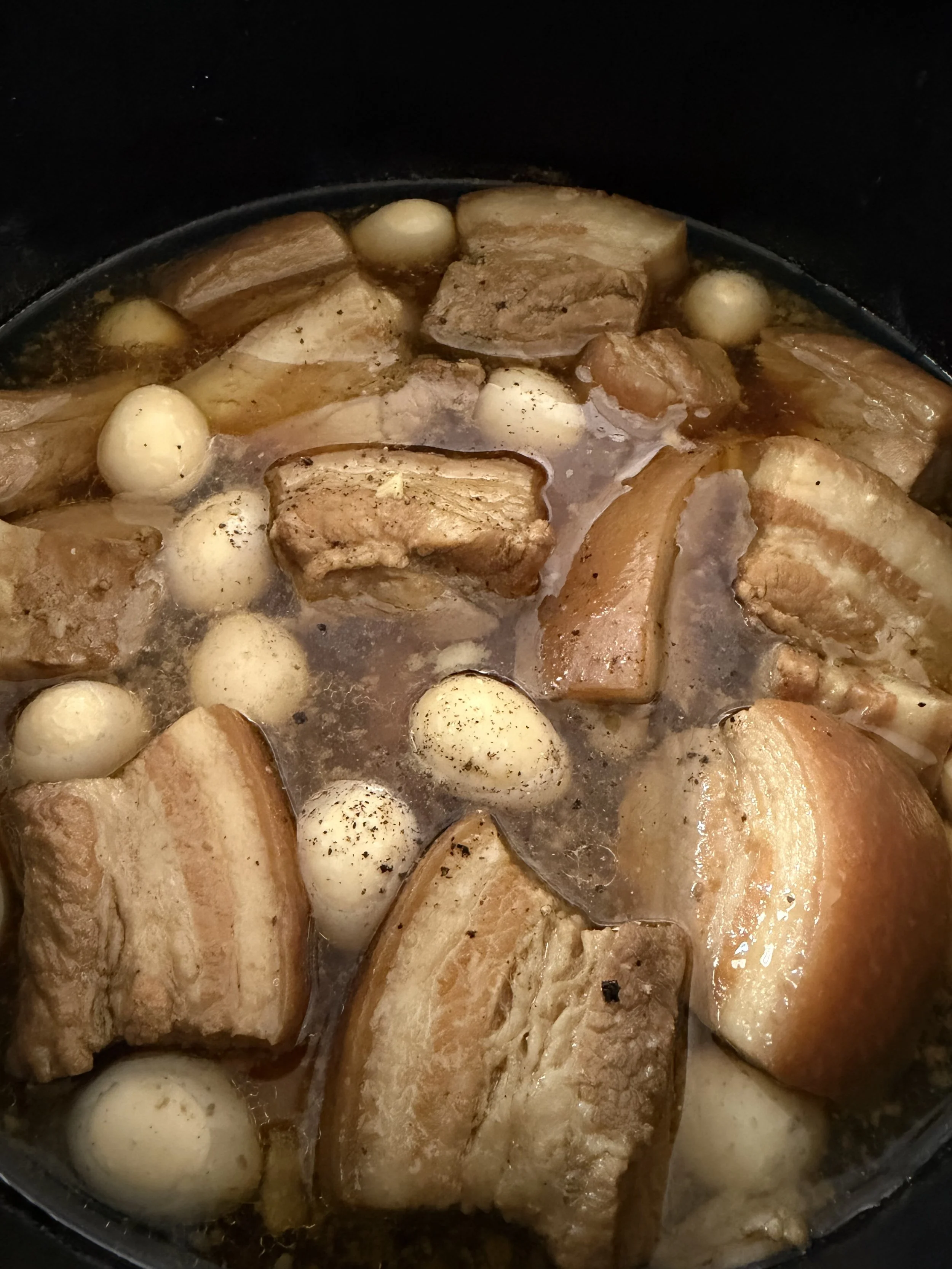
Melt in your mouth
